
As autumn approaches, golf course superintendents face a critical window for golf course weed control. Late-summer and early-fall weed outbreaks can weaken healthy turfgrass before it goes dormant for winter. Invasive species — dandelion, clover, crabgrass, and annual bluegrass (Poa annua) — fill turf voids during cold months, leading to severe patchiness and delayed spring recovery.
Traditionally, controlling late-season weeds meant broadcast spraying entire fairways and roughs with synthetic herbicides. Today, high-resolution aerial imaging, artificial intelligence (AI), and agricultural drone spraying services from Tex-Air Drone allow turf managers to target specific weed hotspots instead of treating everything. By pairing high-resolution mapping sensors with precision drones, golf courses can reduce herbicide usage by roughly 20% to 60%, lowering chemical costs while protecting non-target turf.
Phase 1: High-Resolution Weed Detection with the Sentera 65R
Effective spot-spraying begins with pinpoint detection. Standard aerial cameras do not have enough pixel detail to spot narrow-leaf weeds or detect early-stage broadleaf rosettes in turfgrass.
To solve this, Tex-Air Drone uses the Sentera 65R Sensor — an ultra-high-resolution 65-megapixel global shutter camera purpose-built for precision mapping and weed detection.
Key advantages of the Sentera 65R for golf course weed scouting:
- Sub-centimeter spatial resolution: The Ground Sample Distance (GSD) can be as small as 0.12 inches (0.3 cm) per pixel. The Sentera 65R captures leaf-level detail across fairways, roughs, and native areas.
- Distortion-free global shutter: Captures crisp, high-speed images without motion blur or rolling-shutter skew, ensuring accurate geospatial data for digital maps.
- Rapid course coverage: With a 27mm wide-angle lens, one drone flight maps large areas quickly, fitting smoothly between player tee times.
Tex-Air Drone is an authorized seller and service provider for Sentera Sensors, capturing ultra-sharp orthomosaics for golf courses in Texas, New Mexico, and Oklahoma.
Phase 2: AI Weed Identification & Prescription Map Generation
After the Sentera 65R collects imagery, machine learning software processes the orthomosaic and identifies weed infestations. AI models discriminate between desirable turf species — such as creeping bentgrass or bermudagrass — and broadleaf or grassy weeds.
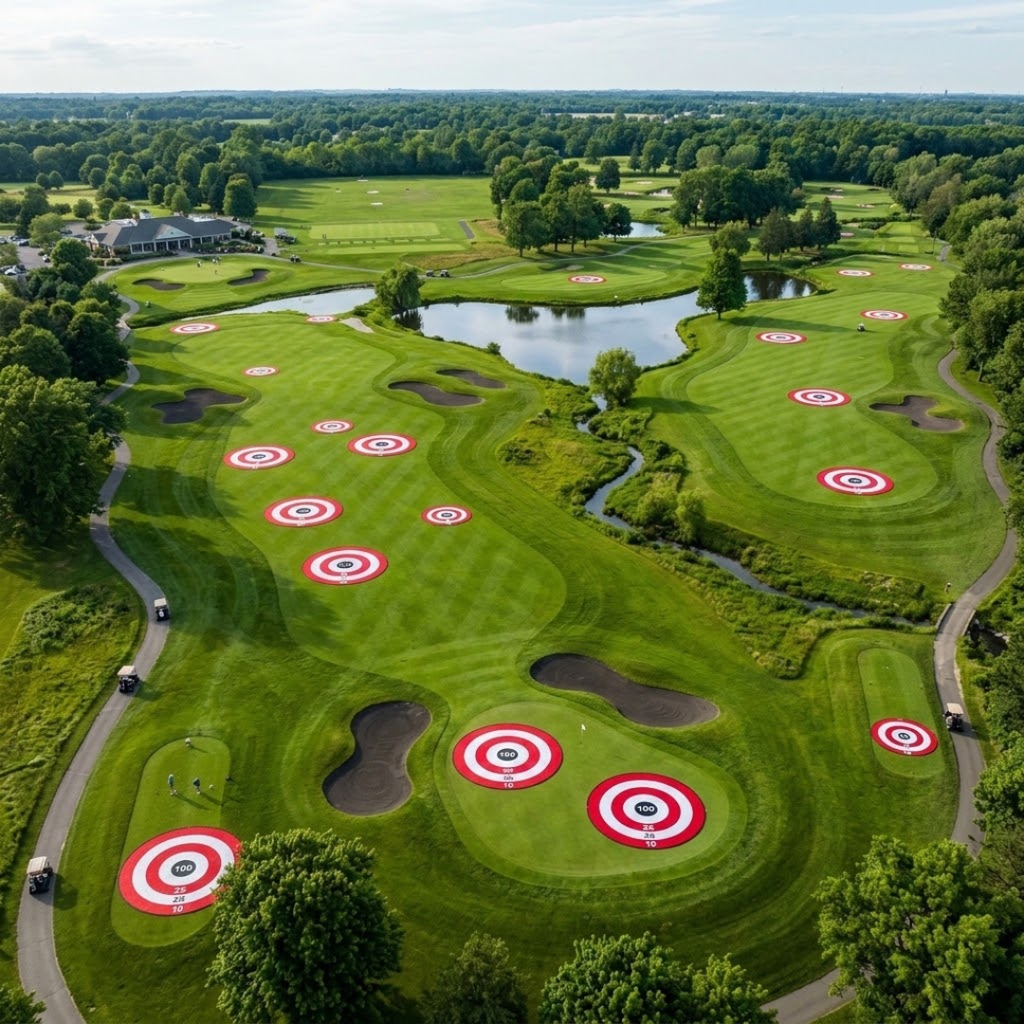
This automated processing creates a prescription map (GIS shapefile) showing the exact GPS coordinates and boundaries of each weed hotspot on the course. Instead of spraying 50 acres of fairways, the prescription map might reveal that only 8 acres actually require treatment.
Phase 3: Precision Spot-Spraying with the DJI Agras Spray Drone
With the prescription map loaded, Tex-Air Drone uses the DJI Agras spray drone for site-specific spot spraying. Guided by RTK GPS navigation, the Agras drone flies planned routes autonomously, activating its spray nozzles only when it passes over targeted weed zones.
Using an agricultural spray drone for golf course weed control provides distinct benefits:
- Zero soil compaction or turf damage: Heavy tractor-mounted sprayers can compact soil and cause ruts on soft, moist fall turf. Spray drones operate completely overhead, leaving zero physical footprint on fairways or roughs.
- 20% to 60% reduced chemical use: Apply herbicides only where weeds are present. This cuts input costs, reduces environmental footprint, and supports Integrated Pest Management (IPM) best practices promoted by the USGA Green Section.
- Eco-friendly precision for limited-pesticide courses: Some courses limit pesticides or follow organic rules. Spray drones can find and treat small weed patches using non-chemical options like bio-based weed killers (Phoma macrostoma) or concentrated acetic acid, boosting leaf contact while avoiding costly input waste.
- Regulatory and license compliance: Tex-Air Drone holds full FAA Part 137 approval for commercial agricultural drone spraying, USDOT compliance, and commercial pesticide applicator licenses in Texas (TDA) and across our service territory.
Transform Your Fall Weed Management Program
Pairing accurate weed detection with the DJI Agras spray drone’s spot-spraying capability is a major step forward in precision turfgrass management. Superintendents can maintain flawless playing conditions while significantly lowering chemical expenses and chemical runoff.
Whether you want to hire a full-service drone team or purchase custom Sentera mapping payloads for in-house use, Tex-Air Drone provides turnkey drone mapping and agriculture services across Texas, New Mexico, and Oklahoma. Check our service area to confirm we cover your course, then request a weed mapping quote before the fall treatment window closes.
Frequently Asked Questions
How does targeted drone spot-spraying cut herbicide costs by up to 60% on golf courses?
Traditional turfgrass weed management relies on broadcast spraying entire fairways and roughs. Drone-based precision spraying uses high-resolution mapping sensors and AI tagging to create targeted prescription maps. By activating spray nozzles only over known weed hotspots, golf courses avoid full-fairway spraying and reduce total herbicide use by 20% to 60%.
How do aerial sensors distinguish between turfgrass and weeds?
Ultra-high-resolution sensors such as the Sentera 65R record sub-centimeter images with ground sample distances reaching 0.3 cm per pixel. AI and machine-learning applications then analyze these orthomosaic datasets, evaluating leaf structure, shape, and color density to distinguish desirable turf species — such as creeping bentgrass and bermudagrass — from broadleaf and grassy weeds.
What licenses and certifications are required to spray herbicides commercially with a drone?
Commercial drone herbicide application requires FAA Part 137 approval for agricultural aircraft operations, USDOT compliance, and state-level commercial pesticide applicator licenses. In the Southwest, operators must hold active commercial applicator licenses from their state departments — for example, the Texas Department of Agriculture (TDA).
☎️ 806-318-1825 🌐 www.texairdrone.com