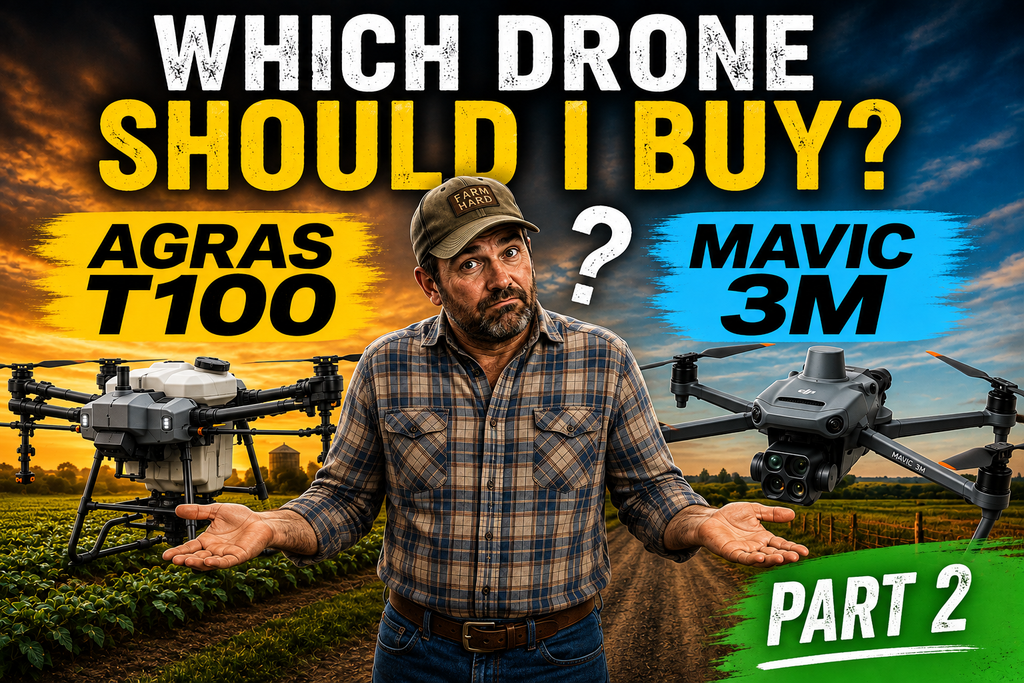
As the below may provoke that “lost in the weeds” feeling, please know that Tex-Air Drone does sell drones with the capabilities described below as well as the proper accessories. Understanding FAA Part 137 and what it requires is where that journey properly starts. We can also enthusiastically provide ramp-up guidance needed to do yourself what we do every day for cutting-edge farmers and ranchers. As it did for us, it starts with the proper license.
Regulatory requirements for operating tech-heavy drones are significantly more demanding than most people expect going in. It weighs heavily on the spraying vs mapping drone decision as they exist in entirely different regulatory universes.
Yes. The Federal Aviation Administration (FAA) requires more than a standard drone pilot certificate to legally spray pesticides or herbicides with a drone in the United States.
FAA Part 107 — The Starting Point
All commercial drone operators need a Part 107 Remote Pilot Certificate. This requires passing the UAG knowledge exam, which covers airspace categories, weather, and emergency protocols. The exam costs $175 and requires renewal every two years. Part 107 is necessary but not sufficient for spraying operations.
FAA Part 137 — Agricultural Aircraft Operator Certificate (AAOC)
Part 137 is required for any commercial aerial pesticide application. This includes applications done by drone. The certification process takes 90 to 180 days from submission to FAA approval. An operator who buys a spray drone and expects to spray commercially within weeks will be disappointed.
The Part 137 AAOC application involves an operations manual, training records documentation, and FAA review.
Drones over 55 lbs require an additional Section 44807 exemption as part of the FAA Part 137 application. The DJI Agras T100, at full payload, is well over 55 pounds at takeoff, placing it firmly in the category requiring that additional exemption.
State Pesticide Applicator License
Depending on the state where operations will take place, a state chemical applicator license may be necessary before agricultural spraying can be done. For operators working across Texas, Oklahoma, and New Mexico — Tex-Air Drone’s service territory — that means navigating three separate state licensing frameworks in addition to the federal requirements.
The Bottom Line on Ag Drone Requirements
Owning and operating a commercial spray drone requires Part 107 certification, FAA Part 137 certification, a state pesticide applicator license, and an additional FAA exemption for drones over 55 pounds. The Part 137 process alone takes three to six months.
A mapping drone, by contrast, operates under Part 107 only. No spray licensing, no AAOC, no pesticide applicator certification. That is one of the most practically significant differences between these two agricultural drone types.
The Real Learning Curve: Precision Spraying Is More Complex Than It Looks
Regulatory compliance is only half the challenge. Considerations include proper spray rate settings, nozzle selection, and droplet size management. Waiting for the right wind and weather conditions. Planning battery rotations. Integrating field-by-field prescriptions. Using agronomic knowledge to match chemistry to the target pest at the right growth stage. A “fly and spray” flight operation produces results that do not justify the equipment cost.
Precision spraying guided by a prescription map requires a skilled pilot familiar with agriculture mapping software and the spray drone itself. Tex-Air Drone both performs these commercial agricultural drone spraying services and — for those whose needs justify owning their own drone — can advise and later train service clients who become owner/operators.
Frequently Asked Questions
Should You Buy an Ag Drone or Hire a Custom Applicator?
For producers who want to apply drone technology without the regulatory burden, capital investment, and operational learning curve of owning their own spray drone, hiring a custom drone applicator spares busy farmers and ranchers the extensive ramp-up we’ve described. For farms and ranches that do not justify owning a commercial spray drone, custom application services deliver a better return per dollar.
For producers who want the data-gathering capabilities of a mapping drone — NDVI mapping, crop health assessment, variable rate prescription generation — and the spray application executed by a qualified custom applicator, Tex-Air Drone provides both sides of that workflow across its Texas, Oklahoma, and New Mexico service territory.
The spraying drone vs mapping drone decision does not have to be all-or-nothing. The right answer for many operations is a mapping drone you own and operate yourself, paired with a custom applicator relationship for the spray execution.
In commercial operations, what is the main difference between a spraying and mapping drone?
A mapping drone is a data-gathering platform that captures imagery for crop health analysis, NDVI mapping, and prescription generation. A spraying drone is a heavy-lift application platform that carries liquid or granular payloads for field application. The distinction also matters legally — spraying drones require FAA Part 137 and a state pesticide applicator license in addition to the standard Part 107 certificate that mapping drones operate under.
Do I need a license to spray with a drone in Texas?
Yes. Commercial drone spraying requires an FAA Part 107 Remote Pilot Certificate, an FAA Part 137 Agricultural Aircraft Operator Certificate, and a Texas state pesticide applicator license. Drones over 55 pounds at takeoff also require a Section 44807 FAA exemption. The FAA Part 137 certification process alone takes 90 to 180 days — a timeline that surprises most first-time buyers who expect to be operational within weeks of purchase.
What is the difference between Part 107 and Part 137?
Part 107 is the FAA’s standard commercial drone operating certificate required for all commercial drone operations. FAA Part 137 is an additional agricultural aircraft operator certificate specifically required for aerial pesticide and chemical application. You need both to legally spray with a drone commercially — Part 107 alone is not sufficient for any spraying operation regardless of the drone or the chemical being applied.
Is the DJI Mavic 3 Multispectral a spraying drone or a mapping drone?
The DJI Mavic 3 Multispectral is a mapping drone. It captures multispectral and RGB imagery for crop health analysis and prescription mapping but does not carry or apply any spray payload. It operates under Part 107 only and does not require FAA Part 137 certification.
Can I hire a commercial drone pilot for drone spraying without owning a drone myself?
Yes. Tex-Air Drone provides cost-effective custom aerial application services across Texas, Oklahoma, and New Mexico, allowing producers to access precision aerial application without purchasing equipment or obtaining spray certifications themselves. This is often the most practical path for operations that cannot yet justify the full regulatory and capital investment of drone ownership.
Contact Tex-Air Drone Today
Whether you are considering a spraying vs mapping drone to own and operate yourself, need help understanding FAA Part 137 requirements, or want to explore what it looks like to hire a qualified custom applicator, Tex-Air Drone’s team is available to walk through the options with you. Get an ag drone consultation from Tex-Air Drone to start the conversation. You can also check Tex-Air Drone’s Texas, Oklahoma, and New Mexico service area to confirm coverage for your location.
📞 806-318-1825 🌐 www.texairdrone.com