

Drone-Based Bison Fly Control for a Large-Scale Bison Operation
Tex-Air Drone Uses Biological Fly Control Drone Spraying to Reduce Biting Fly Populations
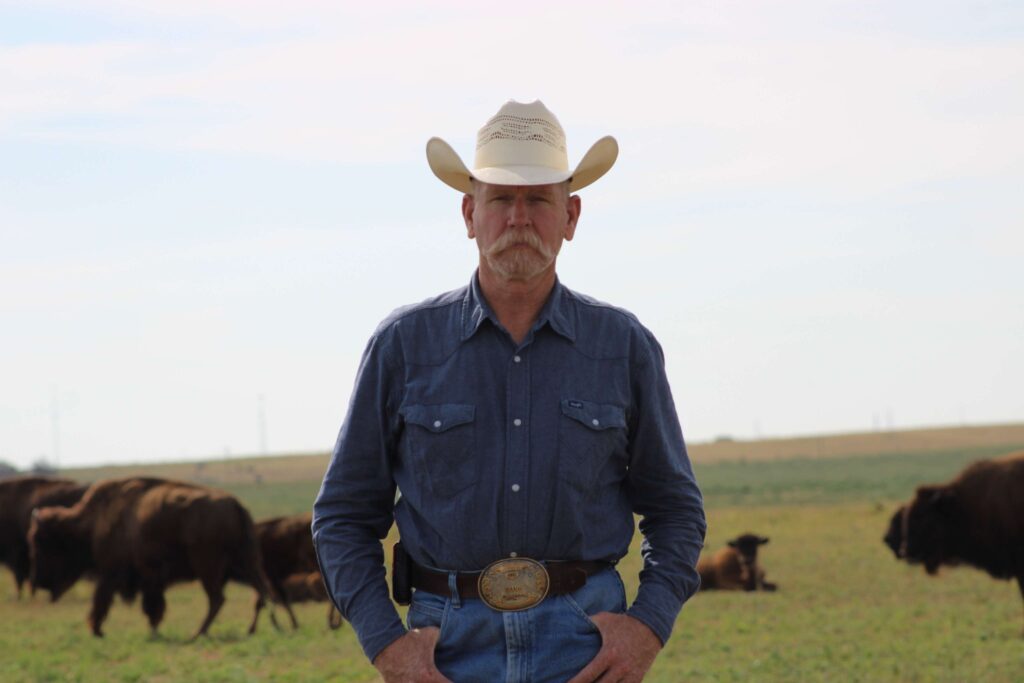
Frasier Bison LLC / Southwest Bison
Managed by Tim Frasier
Herd Size: 2,000 – 4,000 head of American bison
Operation Type: Regenerative (no pesticides, synthetic fertilizers, or herbicides)
The Challenge
In late 2024, Frasier Bison LLC / Southwest Bison faced a severe biting fly infestation across its large regenerative bison operation. With a herd ranging from approximately 2,000 to 4,000 American bison, controlling the outbreak quickly became critical to protecting herd health and maintaining the operation’s regenerative management practices.
The need for effective bison fly control became increasingly urgent as fly pressure continued to rise, reflecting a broader management challenge across bison operations where producers may use chemical, biological, and natural methods to control fly populations.
- Biting flies were spreading confirmed bloodborne diseases
- Animal stress levels increased significantly
- Death loss was attributed to disease transmission
- Traditional control methods using permethrin provided only temporary relief
- Fly populations would rebound quickly, never reaching full elimination
The problem was especially difficult because Frasier Bison operates under regenerative protocols that avoid pesticides, synthetic fertilizers, and herbicides. Chemical treatments were being used because of the severity of the infestation and limitations of conventional equipment, but that approach did not align with the ranch’s long-term management goals.
The operation needed a scalable pasture fly control strategy that could reach a large amount of acreage, address intense fly pressure around the herd, and ultimately support a return to a more sustainable approach.
The Solution
Tex-Air Drone was brought in to develop and implement a large-scale biological fly control strategy using its agriculture drone services and the Terregena balEnce™ fungal-based product.
Rather than treating the project as a standard spraying job, the Tex-Air Drone team first evaluated the property, flight routes, herd behavior, and potential safety concerns associated with operating drones around thousands of bison.
The approach included:
Property Mapping and Flight Planning:
Tex-Air Drone mapped the property and optimized aerial application routes so treatment could be delivered efficiently across the ranch.
Studying Bison Behavior:
Because the team could not assume how a large bison herd would react to drone activity, operators carefully studied the animals and adjusted flight procedures to minimize disturbance.
Precision Drone Pest Control:
Tex-Air Drone’s agricultural drone spraying services were used to apply the biological treatment directly across pasture areas and around the livestock. This allowed the team to cover areas that would have been difficult or inefficient to treat using conventional ground equipment.
Rapid Knock-Down Treatment:
An aggressive initial treatment was used to bring the extreme fly population down quickly and help interrupt the infestation before additional herd losses could occur.
This combination of aerial application and biological fly control gave Frasier Bison a way to address the immediate outbreak while moving away from repeated conventional chemical treatments.
Despite initial uncertainty about how the bison would respond to drone activity, the project was completed without reported negative incidents involving the herd.
The Results
The impact was immediate and dramatic:
-
Major Fly Reduction: Severe fly activity dropped significantly after treatment.
-
Improved Herd Comfort: Reduced fly pressure helped lessen stress across the bison herd.
-
Reduced Disease Risk: Lower biting fly populations helped reduce concerns tied to bloodborne disease transmission.
-
Extended Fly Suppression: The residual effectiveness of balEnce™ continued suppressing fly activity after the initial application.
-
Safe Drone Application: The treatment was completed with no reported adverse reactions or disruptions to the bison herd.
While the emergency treatment required a higher upfront investment, it played a critical role in protecting herd health, reducing fly pressure, and helping prevent further losses.
Ongoing Impact
Thanks to the success of the drone application and biological treatment:
-
Fly Populations Remained Under Control: The operation entered 2025 with dramatically lower fly pressure after facing severe infestation levels the previous year.
-
Return to Regenerative Practices: With the immediate fly crisis under control, Frasier Bison was able to return to the regenerative management practices central to the operation.
-
Long-Term Non Chemical Fly Control: The ranch now has a more sustainable non chemical fly control strategy that reduces dependence on repeated conventional chemical treatments.
The project demonstrated that large-scale bison fly control can be approached differently when biological products, careful planning, and precision drone application are combined. For Frasier Bison, the goal was not simply to suppress one outbreak, but to establish a more sustainable approach to managing future fly pressure.
Key Takeaways
- Drone pest control provides a practical way to treat large livestock operations where conventional ground application may be difficult or inefficient.
- Biological fly control can provide an effective alternative to repeated conventional chemical treatments when properly applied.
- Precision aerial application makes large-scale pasture fly control possible while minimizing unnecessary disturbance to livestock.
- Successful bison fly control requires careful flight planning, an understanding of herd behavior, and close monitoring during application.
- Biological treatment can support a longer-term non chemical fly control strategy for regenerative livestock operations.
Tex-Air Drone has also used precision drone spraying to reclaim difficult grazing acreage in its pasture restoration case study.
Client Testimonial
“The results were stunningly effective. We went from extremely heavy fly populations to negligible, and stayed there. Tex-Air Drone was willing to learn, adapt, and ensure there were no negative impacts on our bison. Because of this approach, we’re starting 2025 under control.”
— Tim Frasier, Frasier Bison LLC / Southwest Bison